Tot school at home: a simple weekly rhythm for 2-year-olds
Fifteen calm minutes a day, one theme a week, and no worksheets required. Here is how to start preschool at home without the pressure.
This post contains affiliate links. As an Amazon Associate I earn from qualifying purchases, at no extra cost to you.
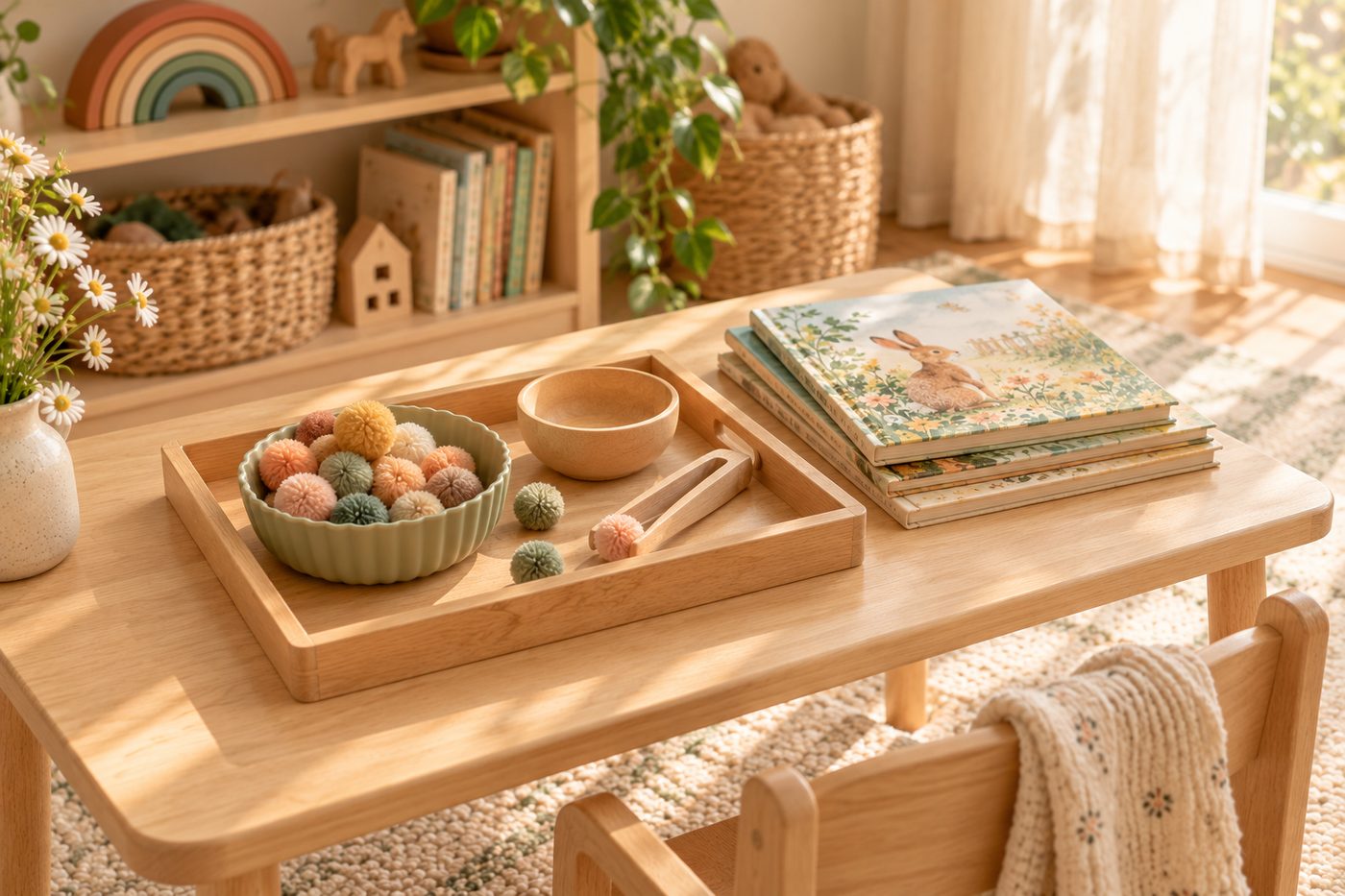
If you have spent any time on Pinterest lately, you have probably seen the words "tot school" pinned under photos of tidy trays, wooden puzzles and tiny hands sorting pom poms by color. It looks lovely. It can also look like a lot.
Here is the good news: tot school is much simpler than it looks. It is not school, and it is not about getting a toddler to read early. It is a short, predictable time each day when you sit down together with one small, hands-on activity. That is all.
More families are choosing to keep little ones home a little longer, or to add a gentle learning rhythm to the hours before preschool starts. Pinterest reported that searches for screen-free activities rose 200% in a year, and slow, present parenting is one of the biggest parenting trends of 2026. Tot school sits right in the middle of both.
This is the rhythm I would hand to any mom who wants to start this week.
What tot school actually is (and is not)
Tot school is play with a little bit of intention behind it. You choose one simple activity, set it out, show your toddler how it works, and then let them explore it their way.
It is not:
- A curriculum you have to finish.
- Sitting still at a table for long stretches.
- Flashcards, drills or anything that ends in tears.
It is:
- 10 to 15 minutes a day, when your toddler is fed, rested and curious.
- One theme a week, so ideas connect and repeat.
- Hands-on: pouring, scooping, matching, stacking, coloring and talking.
For a 2-year-old, repetition is the point. Doing the same color-sorting tray four days in a row is not boring to them. It is mastery.
The weekly rhythm
Pick one theme for the week, such as colors, farm animals, fall leaves or "things that go." Then give each day a gentle focus. You do not need to follow it exactly. The rhythm simply saves you from deciding what to do every morning.
Monday: Read and talk. Start the week with a picture book on your theme. Point, name things and ask simple questions: "Where is the cow? What does the cow say?"
Tuesday: Fine motor. Something for little fingers: scooping pom poms with tongs, posting coins into a slot, or threading large beads onto a pipe cleaner.
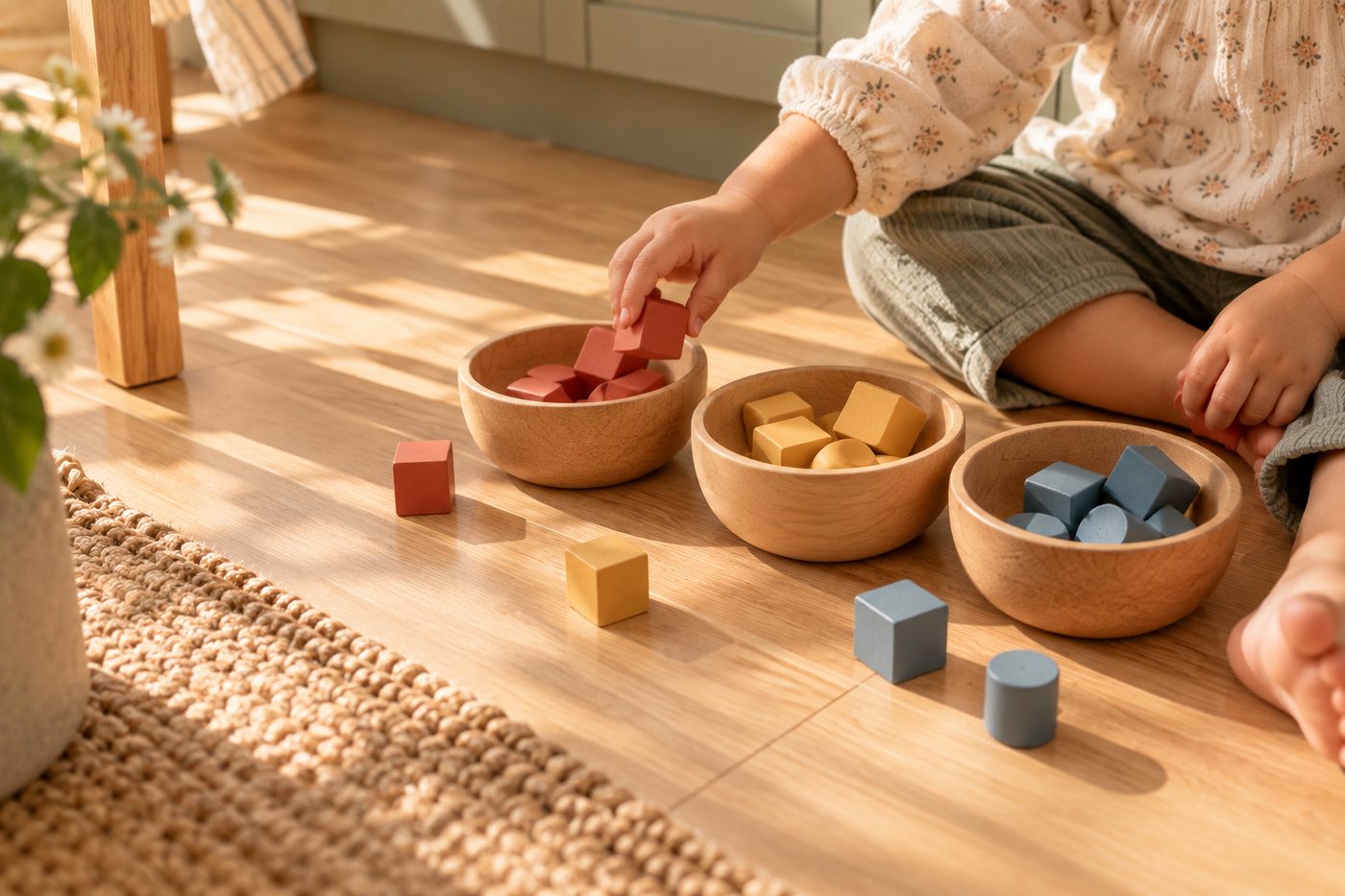
Wednesday: Match and sort. Sort by color or size, or match pictures to real objects. Two categories is plenty at this age.
Thursday: Art and mess. Chunky crayons, stickers, painting with water on the sidewalk, or tearing paper for a collage.
Friday: Move and sing. A theme song, an animal walk across the living room, or a simple obstacle course with cushions.
That is five ideas a week, and most of them use things you already own.
How to set up a tot school corner
You do not need a classroom. A low shelf and one tray are enough.
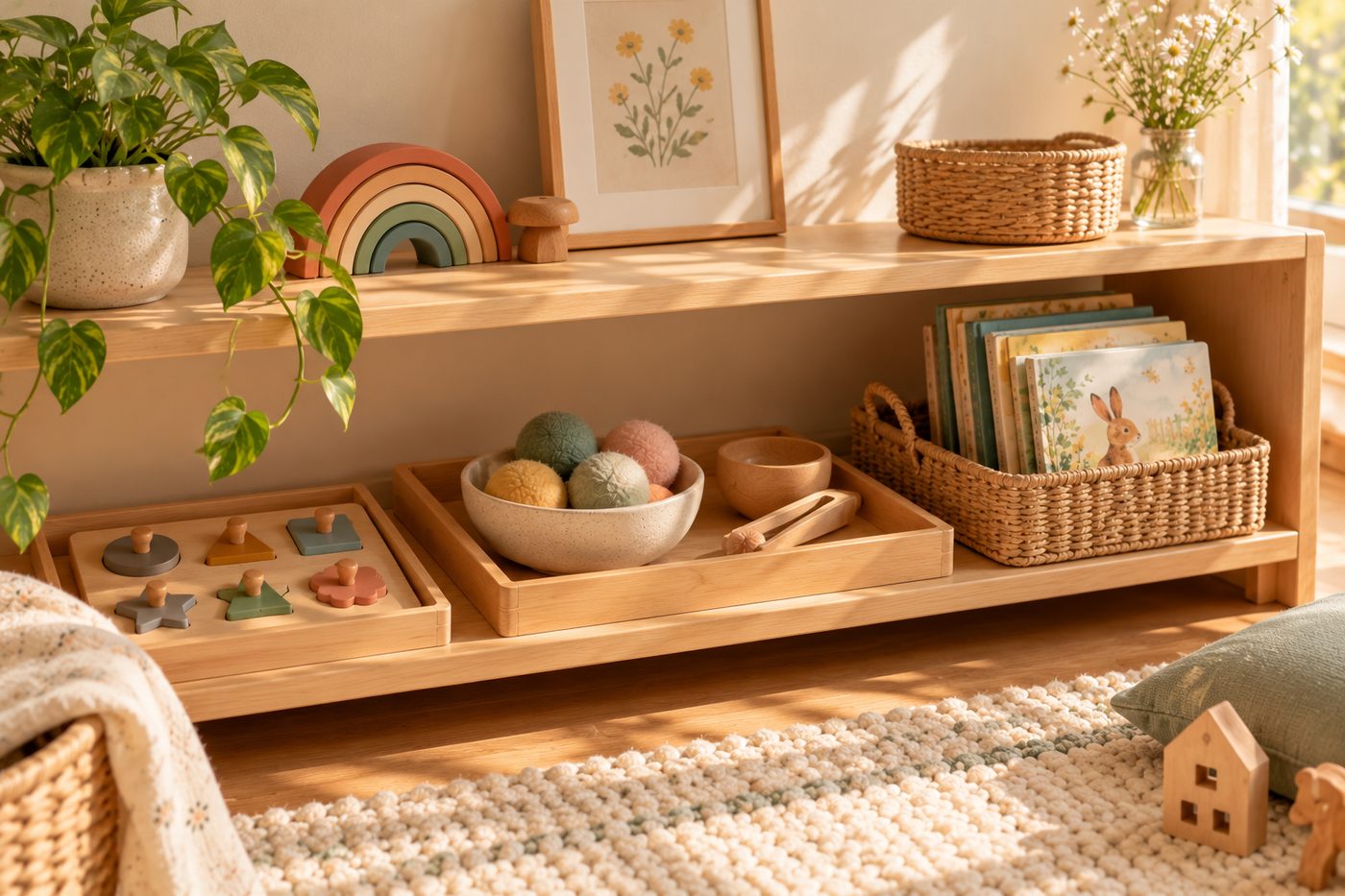
A low shelf your toddler can reach. Keep just three or four activities out at a time and rotate them weekly. Fewer choices make it easier for little ones to focus, and putting things back becomes part of the routine. A sturdy toddler bookshelf and toy organizer at their height turns any corner into a learning nook.
A tray for each activity. Trays tell a toddler "this is where the activity lives." Wooden Montessori activity trays are durable and look lovely on the shelf, but a baking sheet works too.
A small table and chair, or a floor mat. Many 2-year-olds prefer the floor, and that is completely fine.
The short supply list
Start with a handful of open-ended supplies that work for almost every theme:
- Chunky crayons. Easy to grip for small hands. Crayola My First Palm Grip Crayons are made for toddlers.
- Scoopers and tongs. Perfect for fine motor days. The Learning Resources Handy Scoopers are chunky, colorful and built for little hands.
- A matching toy. Simple color and shape matching is ideal at this age. The Learning Resources Snap-n-Learn Matching Dinos double as a sorting and counting toy.
- A wooden puzzle. Chunky peg puzzles build hand-eye coordination. Try a Melissa & Doug wooden peg puzzle in a theme your child loves.
- Safety scissors for later. Closer to age 3, many toddlers love snipping paper strips. Crayola Toddler Safety Scissors have blunt plastic blades.
- A few learning posters. Colors, shapes and animals on the wall give you something to point to all day. Hadley Designs educational posters are bright and simple.
A quick safety note: always check the age label, and keep small items like pom poms, beads and dried pasta for activities you are supervising closely. Anything small enough to fit through a toilet paper tube is a choking hazard for children under 3.
A sample week: "Fall leaves"
Here is what one week looks like in practice.
- Monday: Read a fall picture book together, then collect five leaves on a short walk.
- Tuesday: Use tongs to move orange and yellow pom poms ("leaves") from one bowl to another.
- Wednesday: Sort real leaves into two piles: big and small.
- Thursday: Stick leaves onto contact paper taped to a window, sticky side out.
- Friday: Throw a pile of leaves in the air, then "rake" them into a basket together.
Every activity takes about 10 minutes to set up and uses almost nothing you need to buy.
Tips that make it work
Follow their lead. If your toddler wants to pour the pom poms instead of sorting them, let them pour. They are still learning.
Keep it short. Stop while it is still fun. Five happy minutes beats twenty frustrated ones.
Same time, same place. A predictable slot, such as right after breakfast, helps toddlers settle in quickly.
Talk, do not test. Narrate what they are doing ("You put the red one in the bowl!") instead of quizzing them.
Skip days without guilt. Sick days, busy days and grumpy days happen. The rhythm will be waiting for you tomorrow.
Want your week planned in five minutes? My free Tot School Weekly Planner has this exact Monday to Friday rhythm, a filled-in sample week and 24 theme ideas.
Shop the edit
- Montessori toddler bookshelf and low toy shelf: the base of any tot school corner.
- Montessori wooden activity trays: one tray, one activity.
- Crayola My First Palm Grip Crayons: coloring made easy for little hands.
- Learning Resources Handy Scoopers: the fine motor favorite.
- Learning Resources Snap-n-Learn Matching Dinos: colors, shapes and counting in one.
- Melissa & Doug wooden peg puzzle: a classic for a reason.
- Crayola Toddler Safety Scissors: for snipping practice closer to age 3.
- Hadley Designs educational posters: colors, shapes and animals for the wall.
Start small this week
Pick one theme, one tray and one 15-minute slot. That is your first week of tot school. Once it feels easy, add a new activity to the shelf, and let the rhythm grow with your little one.
Prices change often, so check the current price on Amazon before you buy.